

Proman and Dumore Enterprises have launched four 100% methanol-powered Geely trucks at an event in Trinidad – representing the first such vehicles on the road outside of China.
Proman Chief Executive, David Cassidy, highlighted the importance of the launch for Proman, the wider industry and Trinidad and Tobago. He said: “this launch is an important milestone for Trinidad and Tobago, and for the wider adoption of methanol as a cleaner, practical fuel for road transport. Through our partnership with Dumore Enterprises, we are showing that methanol produced in Trinidad can power vehicles on Trinidadian roads today — reducing emissions, creating new demand for a product in which the country is already a global leader, and opening up opportunities for the wider Caribbean. I congratulate the teams who have brought this pilot to life. Their work demonstrates exactly the kind of practical innovation that can help drive a cleaner, more resilient energy future.”
Following approval from the Transport Commission, Dumore Enterprises has been operating the trucks on both public and private roads since mid July 2026, delivering industrial goods across Trinidad and Tobago. To date, the four Farizon G2 methanol-powered trucks have travelled over 17,000 km, refuelling 41 times at Proman’s production facilities on the Point Lisas Industrial Estate in Couva.
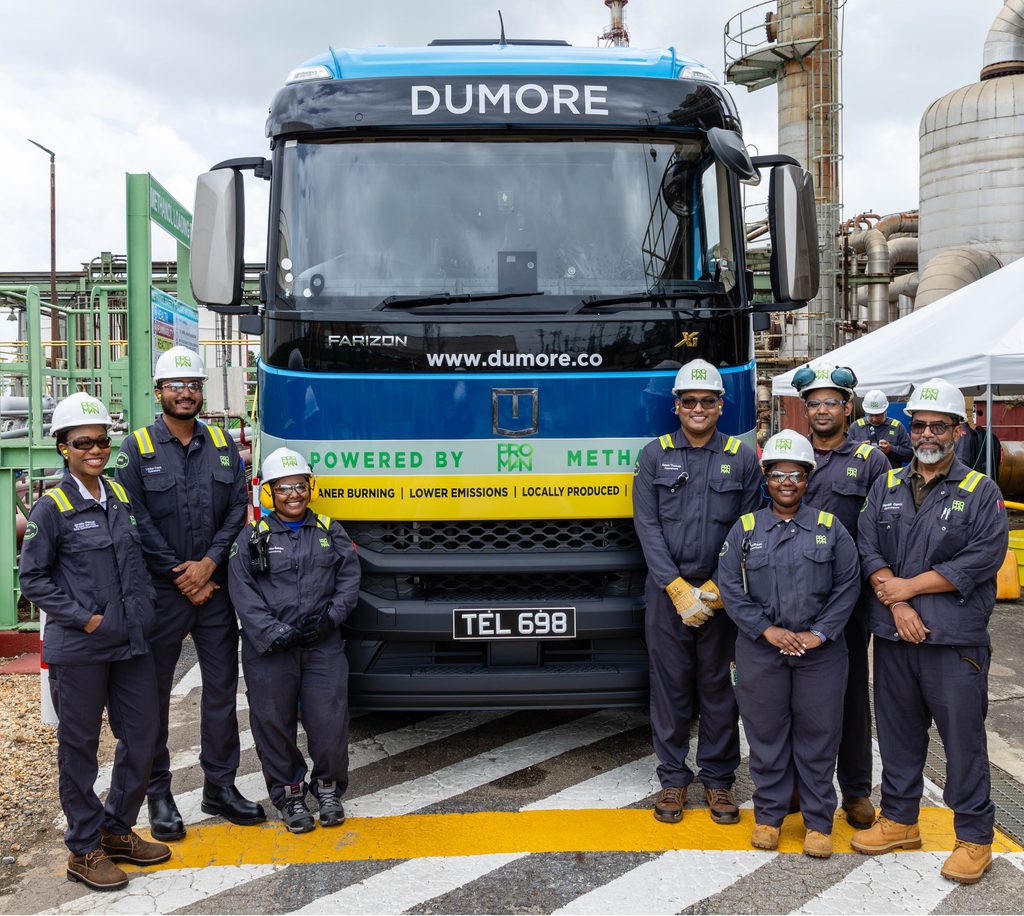
The trucks have consumed over 20 tonnes of methanol so far, avoiding approximately 3.7 tonnes of CO₂e emissions, compared with conventional diesel trucks. Dumore now plans to continue the pilot, which will see the trucks running on the roads for approximately 100,000km.
Methanol has been used in road transport for decades, both as a 100% methanol fuel (M100) and a gasoline blend component for vehicles ranging from passenger cars to buses and heavy-duty trucks. China currently has the world’s largest methanol vehicle fleet of over 30,000 vehicles, supported by established fuel production, distribution, and refuelling infrastructure, and Geely has been at the forefront of their development.
Methanol is a cleaner burning fuel, emitting near zero particulate matter (or soot) when combusted, significantly fewer nitrogen oxide emissions and less carbon dioxide. Because conventional methanol produced from natural gas can be blended progressively with lower-carbon and green methanol without modifications to the engine, this also makes methanol a viable pathway fuel for the energy transition.
With a high-octane rating of around 109, compared to around 91–95 for standard petrol, methanol delivers effective, cleaner power, and as a liquid fuel, is simple and safe to store and distribute.
While the four trucks in the pilot have been approved for use on public roads, to expand the use of methanol fuel in the country further would require the Trinidad and Tobago Bureau of Standards (TTBS) to revise the fuel standard to allow for methanol blends and to introduce a 100% methanol fuel standard.
Anand Ragbir, Executive Director, Proman Trinidad said: “This is a very exciting moment for Proman, Trinidad and Tobago, and road transportation. These four trucks represent a huge opportunity – to improve air quality, to reduce imports of expensive and polluting diesel, and to provide a new export market for Trinidad’s methanol. We are confident the pilot will show that all these can become a reality.”
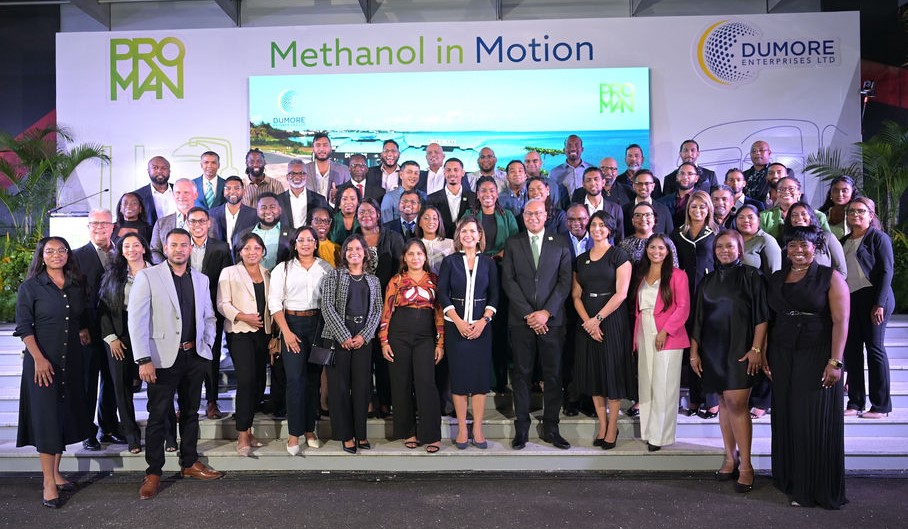
Alex Jodhan, CEO of Dumore Enterprises said: “Transition won’t happen overnight. It is a combination of risk-taking and incremental steps towards adopting technology that improves our impact on the environment. For the first time in the Western Hemisphere, Methanol is powering the movement of heavy cargo. The data we mine will help us build real-world commercial understanding so that policy and framework can guide the steps forward. Every kilometre builds the knowledge that will help shape the future of heavy transportation.”